Colossal Biosciences is adding a new species to its de-extinction lineup, and a new category to its platform.
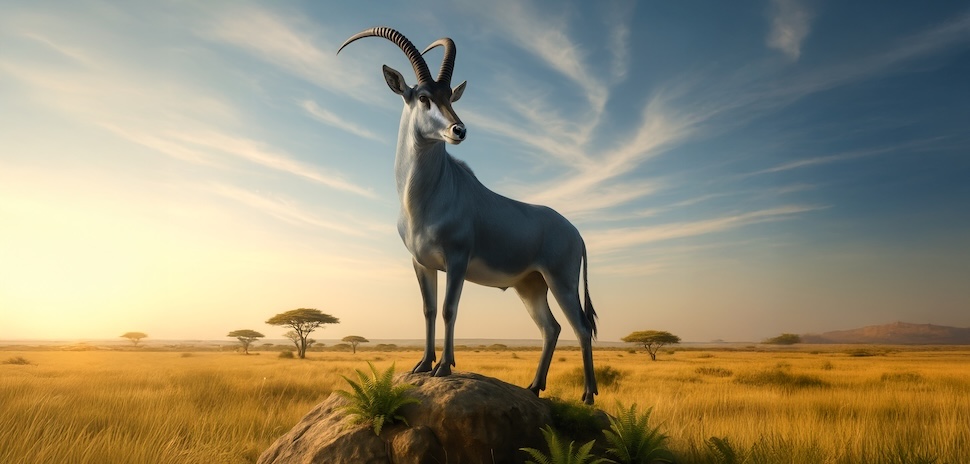
The Dallas-based biotech company on Thursday named the bluebuck, a slate-blue South African antelope hunted to extinction in 1800, as its newest de-extinction target. It’s Colossal’s first project on mainland Africa and its first in the bovid family, the group that includes cattle, sheep, goats, bison, and antelopes.
That last detail is the news inside the news.
With the bluebuck, Colossal is moving its de-extinction platform into a family of more than 140 cloven-hoofed, hollow-horned herbivores. Of some 90 antelope species, 29 are currently threatened with extinction, and populations are declining in 62% of them, according to figures cited by the company.
“Every reproductive technology, genome editing protocol, and conservation tool we develop through this effort is designed to scale—directly benefiting the 29 antelope species currently at risk,” Colossal co-founder and CEO Ben Lamm said in the announcement. “By focusing on the bluebuck, we’re not only working to restore a lost species, but also building solutions that can help protect entire ecosystems.”
Five antelope species—the addax, hirola, Ader’s duiker, dama gazelle, and saiga—are now classified as critically endangered, the company said.
African antelopes “have long been neglected in global conservation,” Beth Shapiro, Colossal’s chief science officer, said in the announcement. “While other megafauna benefit from advanced reproductive technologies and extensive genomic research, antelopes — despite being among the most diverse and rapidly declining large mammals on Earth — have been left behind.”
A fourth front on the tree of life
The bluebuck adds a fourth taxonomic frontier to Colossal’s platform.
So far, the company has focused on mammals like the woolly mammoth and dire wolf, a marsupial (the thylacine), and birds including the dodo and moa. The goal, Chief Science Officer Beth Shapiro said, is to build tools that can work across species.
“The choice of the three species that we have as our flagship… a placental mammal, a marsupial mammal, and a bird, means that we are developing technologies that have application across most of the animal Tree of Life,” she told Dallas Innovates during a February tour of the company’s Dallas headquarters.
The bluebuck also pushes Colossal into the bovid family—and with it, a new layer of scientific work the company says has been building for two years. The effort has been underway since 2024, according to the company.
Four scientific milestones
Colossal points to four main milestones behind the program. The first is genetic: a high-quality genome built from a historical bluebuck specimen housed at the Swedish Museum of Natural History. The work, led by University of Potsdam genomicist Michael Hofreiter and published in Current Biology, gives researchers a detailed map of the extinct species’ DNA.
The second is cellular. The team has created what it describes as the world’s first induced pluripotent stem cells from roan antelope, one of the bluebuck’s closest living relatives. Those cells can be used to study how specific genetic changes behave before moving into living animals.
“Once you have a pluripotent cell line, you can differentiate it into virtually any tissue type, which means you can test how genetic changes affect biology without needing a living animal,” Colossal Chief Science Officer Beth Shapiro said. “That matters enormously for species where every individual counts.”
The third milestone is reproductive. Colossal says it has completed ovum pick-up procedures in two antelope species, the roan and the scimitar-horned oryx, something it describes as a first for for those species. Matt James, the company’s chief animal officer, called those protocols “game-changers for conservation breeding,” saying they could make it easier to collect viable eggs from wild species at scale.
The company has made threatened antelope species the “immediate priority focus” of its broader BioVault initiative, the globally-scaled biobanking effort run through the Colossal Foundation.
A ‘modern-day Noah’s Ark’
That fourth pillar, the BioVault, has a backstory at Colossal. Dallas Innovates reported earlier this year that Colossal had launched the Colossal BioVault and World Preservation Lab at Dubai’s Museum of the Future, with a $60 million investment from the United Arab Emirates as part of an expanded $200 million Series C. Lamm called it a “modern-day Noah’s Ark.” In February, Lamm walked Dallas Innovates through the three-pillar architecture he had negotiated over two years with the UAE government: make biobanking a national imperative; build induced pluripotent stem cell lines and full sequencing alongside sample storage; and pair every facility with public, educational presence rather than, in his words, a “secret location.”
The UAE deal, Lamm said, was “the first domino.”
The bluebuck rewilding itself is being run through two outside partners with separate functions: the Endangered Wildlife Trust, a 53-year-old South African conservation organization, on community engagement and habitat restoration; and Advanced Conservation Strategies, a US-based independent consultant, on reintroduction site selection, rewilding feasibility, and regulatory pathways.
Where the six programs stand
In February, Chief Animal Officer James told us the company aims for 10 species brought back from extinction by 2036, and that the pattern is to pair every new de-extinction target with conservation work in the relevant geography. With the bluebuck, Colossal has publicly named six targets toward that goal. So far, the dire wolf program has produced living animals, including Romulus and Remus, the sibling pair born from gray-wolf surrogates, who were 15 months old at the time of the February press tour and successfully hunting bunnies for the first time but, James said, “really bad at killing things.”
The mammoth, thylacine, dodo, moa, and bluebuck programs are still in development. The mammoth program has produced gene-edited “wooly mice” Colossal uses to validate its mammoth-targeted genetic edits ahead of a two-year elephant gestation, but no mammoth embryo has been announced.
Lamm acknowledged as much in Thursday’s announcement: “We recognize that bringing back the bluebuck is just the first step in a much longer, strategic journey.”
The claim that platform tools developed for an extinct species become conservation tools for living relatives is one Colossal has made before. Andrew Pask, who heads Colossal’s Australia operation at the University of Melbourne, told us about an existing project to engineer the northern quoll, a cat-sized Australian carnivorous marsupial dying off because it eats cane toads and is killed by their toxin. A single-letter change in the quoll’s three-billion-base-pair genome, Pask said, makes the animal resistant. The technology came directly from the thylacine project — “a great example of how de-extinction science can be immediately applied for a conservation outcome,” he said.
Behind the bluebuck reveal is a biotech company that has raised more than $615 million in private capital and now carries a roughly $10 billion valuation. Colossal has also begun spinning out adjacent ventures. After its 2022 spin-out Form Bio, Lamm in March emerged as co-founder of Astromech, an Austin-based AI startup he’s building with Colossal co-founder and Harvard geneticist George Church. Astromech reached a $2 billion valuation nine months out of stealth. Ahead of the announcement, Lamm told Dallas Innovates the spin-out portfolio would keep growing.
The same “platform of synthetic biology” that produced the company’s wooly mice, he said, can produce outputs as different as “drought resistant cattle” or “microbes that eat plastics” — both already active areas of commercial synthetic biology elsewhere.
Don’t miss what’s next. Subscribe to Dallas Innovates.
Track Dallas-Fort Worth’s business and innovation landscape with our curated news in your inbox Tuesday-Thursday.
R E A D N E X T
-
![The South Island giant moa towered over New Zealand's forests for millions of years before becoming extinct within a century of Polynesian settlement around 1400 CE. Colossal Biosciences plans to resurrect the 500-pound birds using ancient DNA extracted from cave deposits and artificial egg technology. [Source image: Colossal Biosciences]](https://s24806.pcdn.co/wp-content/uploads/2025/07/Colossal-Moa.jpg)
The Dallas decacorn is scaling its de-extinction pipeline with indigenous leadership, a New Zealand subsidiary, and economic models for species preservation, including ecotourism opportunities. Filmmaker Sir Peter Jackson helped connect the collaborators, Colossal CEO Ben Lamm says.
-
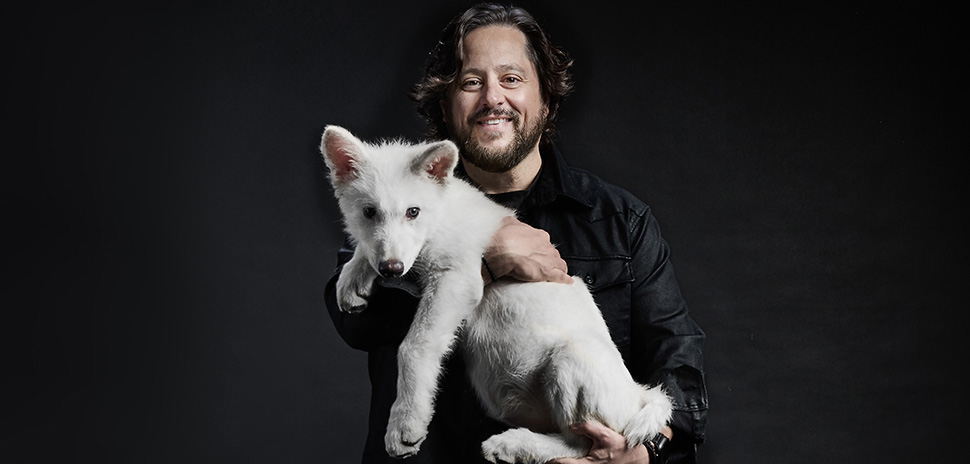
In one of his first deep interviews since Colossal's dire wolf debut made global noise, Ben Lamm joins the TechStuff podcast to talk mammoths, backlash, and why he's not here to play it safe.
-
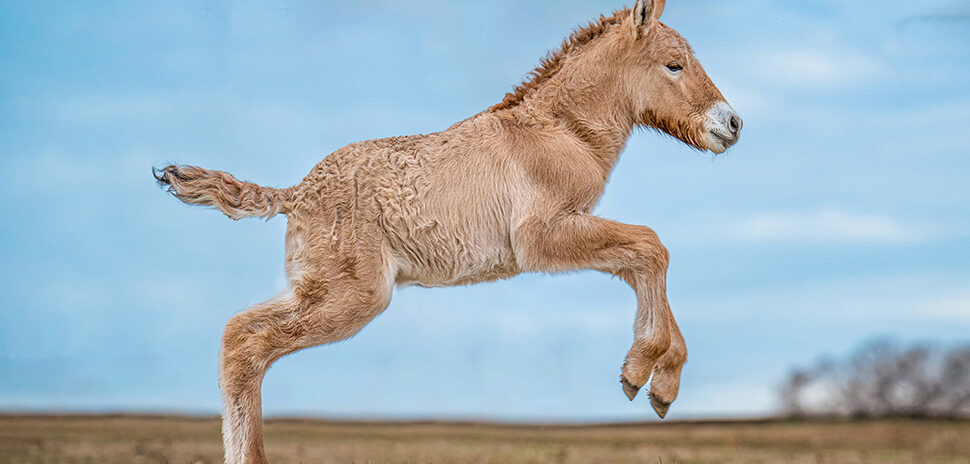
The de-extinction startup is adding more than two decades of commercial cloning expertise to its portfolio with its first acquisition. Days before the announcement, CEO Ben Lamm laid out his playbook at Venture Dallas 2025: run toward critics, treat promises to middle-America classrooms as seriously as commitments to investors—and spin out businesses worth more than $100 million.
-

Part of the 2025 iC³ Life Science & Healthcare Innovation Summit to be held September 16-17 in Dallas, the showcase pitch event is designed to connect university researchers with potential investors, industry executives, and strategic partners. This is the first year the showcase has expanded beyond Texas.
-
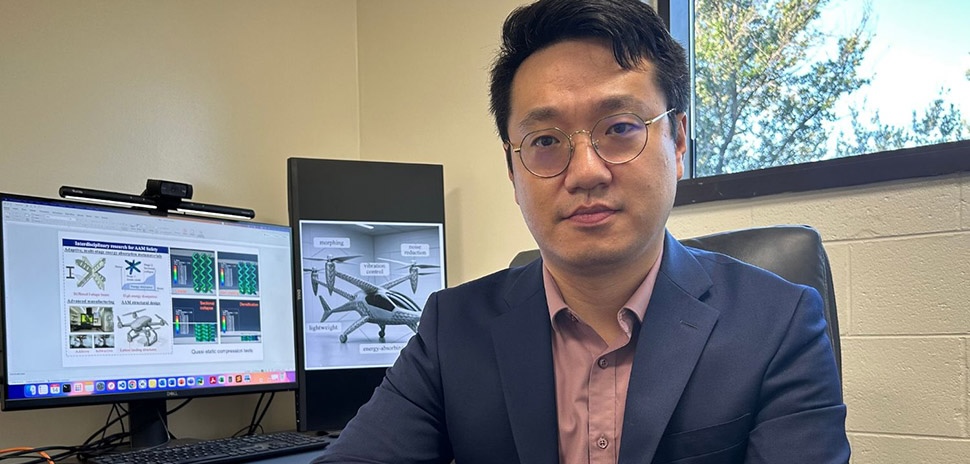
The grant supports development of reusable, impact-resistant materials designed to withstand frequent landings and collision events in next-generation aircraft—everything from air taxis to the flying cars of the future.