Dallas-based IT services provider GDT debuted a supercomputer-level AI lab that lets businesses test technology before adopting it.
Attendees at the lab’s open house, held at the company’s Dallas headquarters Oct. 22, could watch AI demonstrations and ask GDT executives about AI trends.
A “proving ground” for AI
GDT said it is now one of a handful of IT services companies that offer a production-grade environment for businesses to test AI workloads in a real-life setting.
Based on that testing, a business can get a better handle on the production infrastructure and equipment it needs, along with the architecture and other requirements for handling AI workloads, GDT said. The lab can also aid decision-making about software and related services.
Production infrastructure refers to an organization’s tech backbone, including hardware, software, networks and data storage systems. In the context of AI, production equipment can be systems that run AI software in a live environment or machinery for building AI hardware.
“The lab serves as a proving ground that helps customers bridge strategy and execution,” Chris Kapusta, vice president of advisory and transformation at GDT, told Dallas Innovates.
How the lab works
At the lab, businesses can develop, run, fine-tune and compare generative AI and large language models, Kapusta said. They also can explore features such as AI agents, copilots and AI “computer vision.” Or they can test retrieval-augmented generation to make AI-generated information more accurate and less prone to fabrication.
In the lab, one GDT customer is evaluating a digital human avatar for transcription and translation before making a production decision, Kapusta said. A production decision is the final call to move software or systems from testing to real-world use.
“Our customers are under pressure to rapidly support AI deployment, but need to balance the issues of security, governance and token cost management,” Shawn O’Grady, chairman and CEO of GDT, said in a statement.
An AI token is the basic unit of text, images, audio or video that a machine learning or large language model reads, processes and generates.
Inside the lab’s tech
From an equipment standpoint, the lab, run by GDT’s new AI Factory Center of Excellence, is a powerhouse.
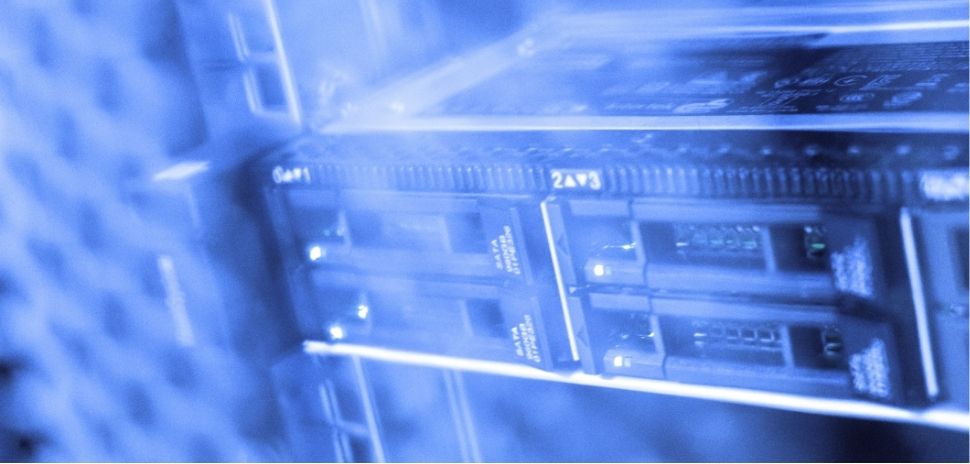
At the heart of the infrastructure is an AI-ready Cisco server equipped with eight Nvidia H200 graphics processing units, or GPUs, chips that power AI training and inference. In addition, the infrastructure features six high-performance Cisco Nexus switches, a NetApp all-flash data storage system for businesses and NetApp network connections delivering speeds of 100, 200 and 400 gigabits per second.
The equipment sits on a server rack that weighs about 900 pounds. Kapusta said the entire setup supplies enough memory speed to read all of the Library of Congress’ digital materials in about half a second.
“The infrastructure has an AI supercomputer’s worth of equipment in a single rack,” Kapusta said.
About GDT
In September, privately held GDT agreed to be acquired by publicly traded Softcat in a deal valued at $1.05 billion. United Kingdom-based Softcat provides IT infrastructure. The acquisition is expected to close by the end of the first quarter of 2027.
Once the deal wraps up, GDT will operate from its Dallas headquarters under the same name and leadership team, Kapusta said. The company, founded in 1996, employs about 900 people worldwide.
R E A D N E X T
-

North Texas has plenty to see, hear, and watch. Here are our editors' picks. Plus, you'll find more selections to "save the date."
-

The startup, led by ex-Remington Hospitality CEO Sloan Dean, relies on 60-plus AI agents to perform back-office tasks so hotel staff can focus on guests.
-
Through demos, webinars and ready-to-use prompts, Retail Ready tackles one real-world retail problem at a time — with no tech expertise required.
-
Watter’s first commercial installation offsets water-heating costs and creates a new revenue stream for the hotel.
-

The Dallas-based de-extinction company said its GenoMorph platform continues a series of breakthroughs aimed at reviving extinct and endangered species.
-

The planned DFW network would link DFW Airport, Love Field, Frisco Station and four other area airports once Archer’s Midnight aircraft wins FAA certification. San Jose, California-based Archer aims to help commuters turn 60- to 90-minute drives into 10- to 20-minute flights.
-

The grant, awarded to UT Southwestern biotech spinoff MusiQ Bio, could pave the way for human clinical trials of the startup’s proprietary cancer-fighting platform within five years.
-

The venture capital firm plans to invest up to $1 billion each in roughly 10 growth- and late-stage companies, with a focus on AI, AI infrastructure and defense. Founder and CEO Alex Davis says the best private tech companies need more capital than ever.
-
Four years after arriving at Pegasus Park, the Boston-based accelerator is adding health and security accelerators and founder clinics, backed by a renewed two-year grant from Lyda Hill Philanthropies.
-
Flexcar says it’s disrupting a $110 billion industry “by providing customers a better alternative to car ownership.”