Dallas-based Susan G. Komen, the world’s leading breast cancer organization, recently awarded $15.4 million in grants to breast cancer researchers on the journey to unlocking the cures for all breast cancers. Covering some of the most promising areas of research, the funded projects include the use of AI for better health outcomes and vaccines that could target the most aggressive and deadliest forms of breast cancer.
A total of 35 researchers representing 24 leading medical and research institutions in the U.S. received funding. Grants support both well-established researchers who have made significant contributions to the field and early-career investigators whose work reflects the future of scientific discovery and innovation in breast cancer research, Komen said.
Victoria Wolodzko Smart, SVP of mission at Susan G. Komen, said that at a time when federal funding for scientific research is increasingly limited and complicated, “Komen’s investment is helping sustain critical momentum in the search for breakthroughs.”
“Demand exceeds currently available government funding,” Smart added in a statement, “creating growing challenges for scientists—particularly early-career investigators—whose groundbreaking ideas often face the greatest barriers to securing support.”
Komen is the largest nonprofit funder of breast cancer research outside of the U.S. government, having invested more than $1.1 billion in research since its founding in 1982.
Finding more effective treatments
In addition to advancing research on AI and vaccine development, the grants will fund research on breast cancer in younger populations, the role of weight loss on breast cancer risk, and prevention and reducing disparities in breast cancer outcomes for all populations.
Many of today’s most important advances in breast cancer treatment began as bold, early-stage concepts, Komen noted. Continued investment in innovative science has helped detect breast cancers earlier, drive more effective treatments, and save more lives. By funding researchers at key points in their careers, Komen said it’s helping promising discoveries continue to move forward rather than being delayed or lost.
“The researchers receiving grants from Susan G. Komen are making lasting contributions to our understanding of breast cancer and bringing the innovation and technology that’s needed to this disease so that all patients can receive the best care possible and enjoy a high quality of life after a breast cancer diagnosis,” said Dr. Ann Partridge, chief scientific advisor for Komen.
Focusing on MBC and tailored treatments
Per Komen, 72% of funding is dedicated to metastatic breast cancer, the most advanced stage of breast cancer and the cause of nearly 43,000 deaths each year in the U.S. A total of 88% of the grants concentrate on precision medicine to customize treatment to each patient’s unique biology.
By investing in research for metastatic breast cancer, health inequities, and personalized treatment strategies to improve care and outcomes for everyone, Komen said it is working to help discover and deploy the solutions to today’s biggest challenges breast cancer patients encounter.
“The treatments we rely on today were once only a dream,” Jennifer A. Pietenpol, Ph.D., chief scientific advisor for Komen, said in a statement. “By continuing to invest in bold, promising ideas, and in the passionate researchers who pursue them, we have the potential to drive the next generation of lifesaving breakthroughs in breast cancer.”
2026 Recipients of Komen Grants
Here are Komen’s newly announced grantees:
Recipients of Career Catalyst Research Grants
Di Martino, Julie, PhD, New York Medical College
Li, Carman, PhD, University of Pennsylvania, Perelman School of Medicine
González Díaz, Eva, PhD, Icahn School of Medicine at Mount Sinai
Zhang, Anli, PhD, The University of Texas Southwestern Medical Center (UT Southwestern)
Sayaman, Rosalyn, PhD, The Regents of the University of California, San Francisco
Schrank, Benjamin, MD, PhD, The University of Texas MD Anderson Cancer Center
Recipients of Career Transition Awards
Ransohoff, Julia, MD, Stanford University School of Medicine
Peiffer, Daniel, MD, PhD, The University of Chicago
Karvonen, Hanna, PhD, NYU Grossman School of Medicine
Recipients of Opportunity Grants
Wolff, Antonio, MD, Johns Hopkins University School of Medicine
Derksen, Patrick, PhD, University Medical Center Utrecht
Curtis, Christina, PhD, Stanford University School of Medicine
Recipients of Leadership Grants
Polyak, Kornelia, MD, PhD, Dana-Farber Cancer Institute
Pietenpol, Jennifer, PhD, Vanderbilt University Medical Center
Ramirez, Amelie, DrPH, The University of Texas Health Science Center at San Antonio
Krop, Ian, MD, PhD, Yale School of Medicine
Newman, Lisa, MD, MPH, Weill Cornell Medicine
Park, Ben Ho, MD, PhD, Vanderbilt University Medical Center
Troester, Melissa, PhD, University of North Carolina – Chapel Hill
Curtis, Christina, PhD, Stanford University School of Medicine
Tamimi, Rulla, ScD, MS, Weill Cornell Medicine
Pal, Tuya, MD, Vanderbilt University Medical Center
Jagsi, Reshma, MD, DPhil, Emory University
Kurian, Allison, MD, MSci, Stanford University School of Medicine
Ma, Cynthia, MD, PhD, Washington University in St. Louis
Tolaney, Sara, MD, MPH, Dana-Farber Cancer Institute
McDonnell, Donald, PhD, Duke University
Domchek, Susan, MD, University of Pennsylvania
Coussens, Lisa, PhD, Oregon Health & Science University
Lin, Nancy, MD, Dana-Farber Cancer Institute
Battaglia, Tracy, MD, MPH, Yale University
Shah, Sohrab, PhD, Memorial Sloan Kettering Cancer Center
Chavez MacGregor, Mariana, MD, MSc, The University of Texas MD Anderson Cancer Center
Recipients of Scientific Strategy and Programs Grants
Quinn, Kate, CFRE, American Society of Clinical Oncology
Mukhtar, Rita, MD, The Regents of the University of California, San Francisco
Welm, Alana, PhD, Metastasis Research Society
Don’t miss what’s next. Subscribe to Dallas Innovates.
Track Dallas-Fort Worth’s business and innovation landscape with our curated news in your inbox Tuesday-Thursday.
R E A D N E X T
-

North Texas has plenty to see, hear, and watch. Here are our editors' picks. Plus, you'll find more selections to "save the date."
-
Because of the explosion in the use of artificial intelligence throughout society, the legal industry is undergoing seismic change, and the profession needs ways to build the judgment, confidence, and fluency to use AI effectively, BARBRI said.
-
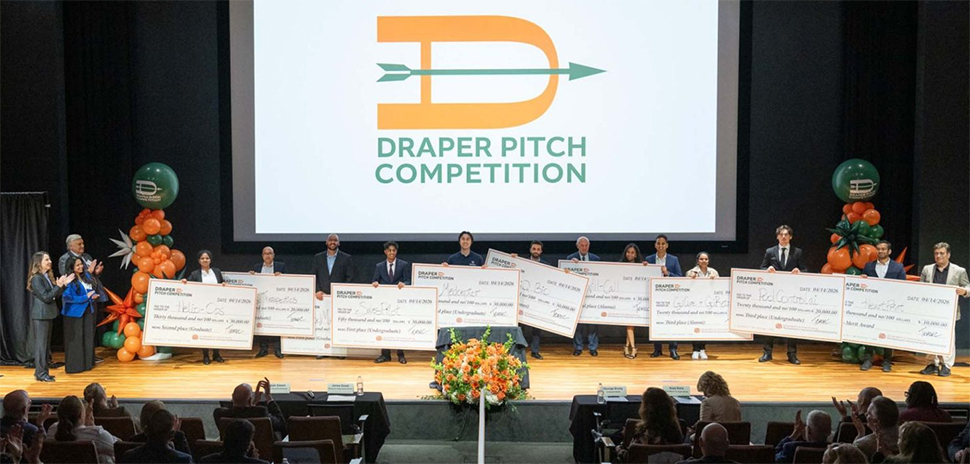
Nine student and alumni teams made the finals in three tracks: undergraduate, graduate student, and alumni. Winning ideas ranged from AI sales coaching to radiation mapping and noninvasive brain drug delivery as the university’s entrepreneurship push continues to scale.
-

Bottle Rocket founder and serial entrepreneur Calvin Carter and AI programmer-turned-medical-doctor Alex Sheppert developed Matic's agentic AI to take care of the busywork—"so physicians can focus on the patient and practices can optimize care."
-
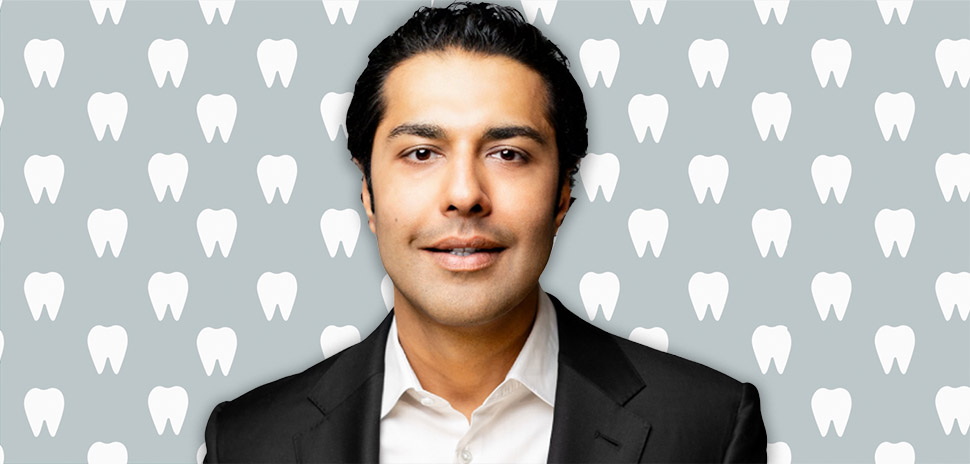
The DECA Dental founder returned to his alma mater to keynote UT Dallas' record-breaking Draper Pitch Competition. He told student founders what it really takes.
-
Cartesian's global footprint includes London, Boston, New York, and Paris, with several hundred experts supporting clients in key international markets, primarily in North America and EMEA. The combined organization has more than 5,000 specialists across AI services, data, analytics, cloud, and user experience, serving a diverse portfolio of Fortune 1000 companies and global enterprises.
-
Travis Machen, CEO and group head of global banking and markets at Scotiabank, said the acquisition "further supports our strategic focus within the North American corridor."
-
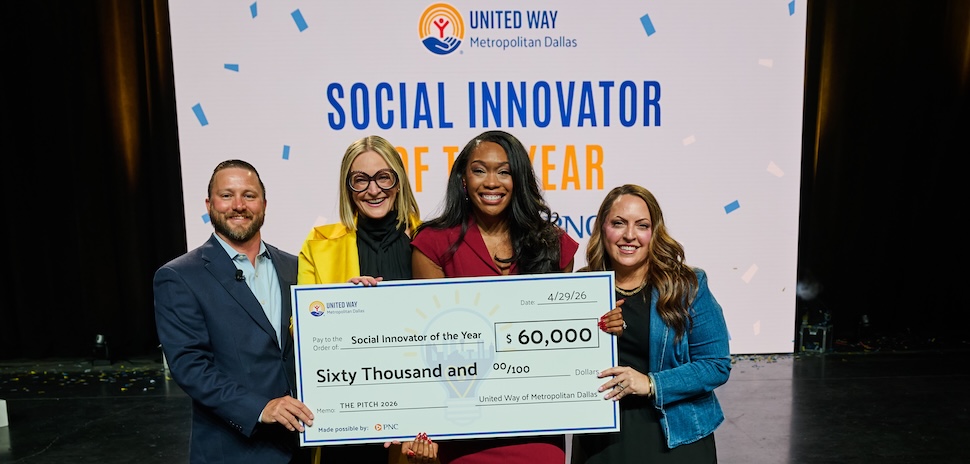
The Dallas-based reproductive health platform offers a cycle-tracking app for logging cycles and managing conditions like endometriosis and PCOS. It was one of five finalists taking part in North Texas' premier social innovation competition.
-
“Dallas is a city on the rise—a magnet for capital, talent, and ideas," Luisa del Rosal said. "I look forward to working with the board, our members, and partners to amplify ECD’s role as a premier forum for the conversations that will define our economic future."
-

The MGUSD stablecoin enables MoneyGram to offer stable value, lower costs, instant access, and reliable, easy-to-use financial tools, engineered not for crypto natives, but for the billions of people who move money across borders every day or who don't have access to local financial services, the company said.