Dallas Fort Worth International Airport is looking for a tech wizard to pilot its AI program — a significant hire in the airport’s quest to further embrace AI.
A job posting on DFW Airport’s website said the full-time principal AI lead, a newly created job, will be the airport-wide “strategic and technical authority” on this quickly evolving technology. The job posting is no longer live.
This expert will oversee the airport’s entire AI strategy, “ensuring safe, ethical and business-aligned AI adoption,” the job posting said. Among other duties, the AI leader will manage the airport’s AI infrastructure, evaluate new technology, launch pilot projects and set guidelines to prevent unauthorized use of AI.
DFW Airport said it’s looking for a pro who can keep tabs on AI trends, develop enterprise-level AI tools and frameworks, direct the acquisition and adoption of AI software, and establish AI best practices.
In addition, the AI leader will collaborate with the HR team to design AI training programs for DFW Airport’s more than 2,000 employees. Also, the principal AI lead will raise awareness about the technology and “support the cultural shift needed for successful AI adoption,” the job posting said.
Advancing DFW Airport’s AI
The principal AI lead will be a key figure in shepherding the airport’s data and AI program, a DFW spokesperson said. The new position “reflects our continued focus on innovation and digital transformation,” the spokesperson said.
“The role will help DFW identify and scale opportunities to use AI to improve operational efficiency, enhance the customer experience and support employee productivity,” said the spokesperson.
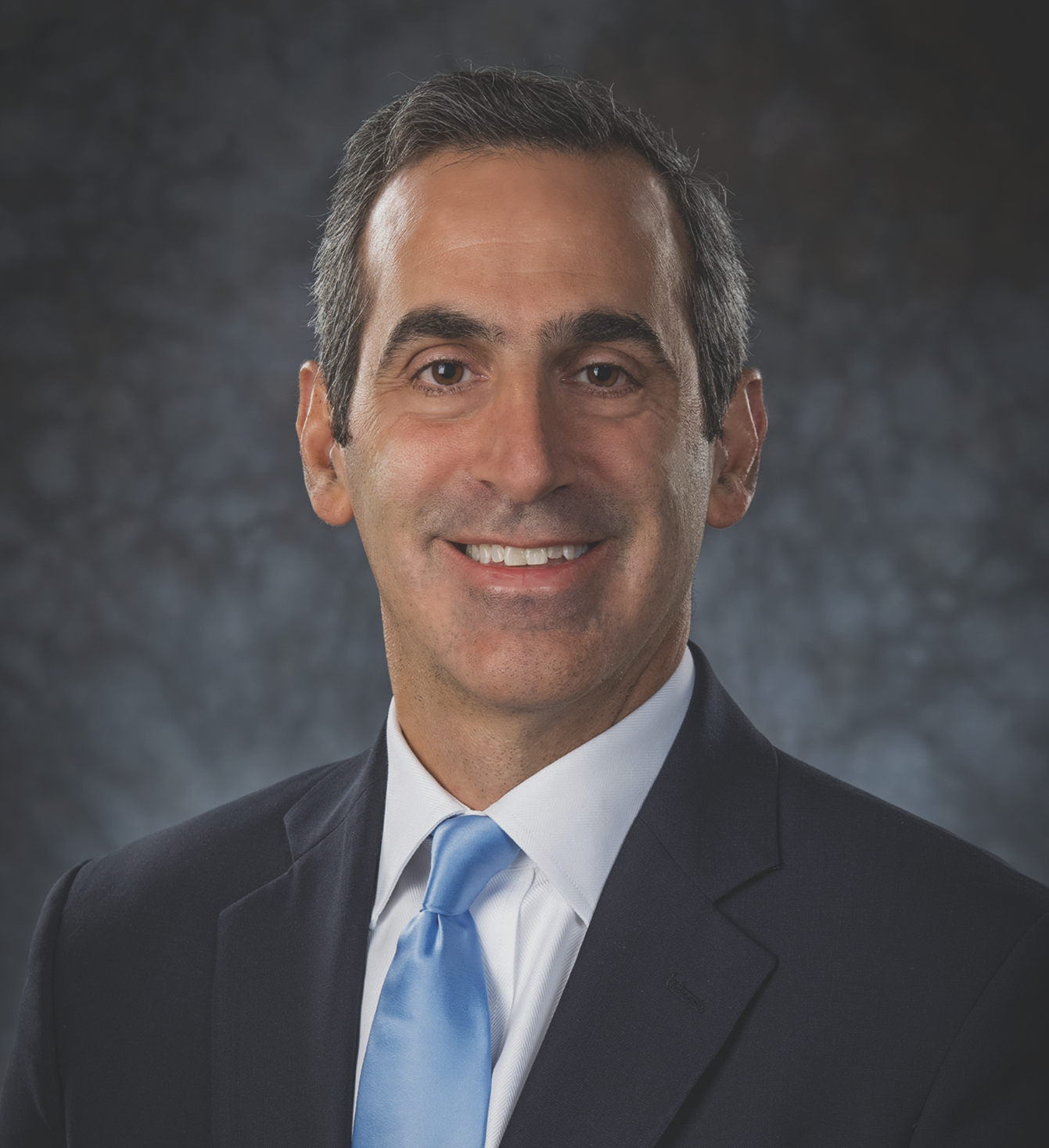
Paul Puopolo is executive vice president and chief technology and innovation officer at DFW Airport. [Photo: Dallas Fort Worth International Airport]
The AI chief will work in tandem with Paul Puopolo, a DFW executive vice president who is chief technology and innovation officer, the spokesperson said. Puopolo is founding president of the Airports AI Alliance.
A newly reconfigured group at DFW will create the roadmap for tech advancements at the nearly 27-square-mile airport over the next decade, with AI being a key driver.
“AI is now becoming less of an innovation and more of an operational necessity as the foundation for business going forward,” Puopolo told DFW Airport board members in March.
AI duties at airports
While major U.S. airports typically employ several people to manage AI strategy, few appear to have a dedicated AI chief.
At Dallas Love Field, for instance, the airport’s innovation, capital development and operations technology teams share AI responsibilities, a spokesperson told Dallas Innovates.
Similarly, at least four people handle AI strategy at Denver International Airport, a spokesperson told Dallas Innovates. AI strategy falls under the business technology umbrella of the airport, a founding member of the Airports AI Alliance.
On the other hand, Minneapolis-St. Paul International Airport just brought aboard an AI leader. The Twin Cities’ Metropolitan Airports Commission, which operates the airport, hired Nick Running as assistant director of data and AI. The commission’s chief information officer, Eduardo Valencia, is president of the Airports AI Alliance.
Intellectual AI and industrial AI
The hiring of an AI leader at DFW follows recent efforts to enhance the airport’s AI ecosystem.
In a new case study, Boston Consulting Group detailed its recent work with DFW, including how to embed AI across the organization.
The consulting firm said DFW set a goal of achieving a more than 20% efficiency gain in operations and maintenance over the next five years. The firm and the airport settled on a plan that relies largely on an AI ramp-up to boost efficiency.

Chris McLaughlin is DFW Airport’s CEO. [Photo: Dallas Fort Worth International Airport]
“AI is part of every conversation now. We think about it in two ways: intellectual AI and industrial AI. We take a balanced approach, empowering teams while maintaining strong governance,” airport CEO Chris McLaughlin told the consulting firm. “But it’s clear that AI will be central to achieving the efficiency gains we need over time.”
Two new AI platforms at DFW
The Boston Consulting Group’s project resulted in DFW adopting two AI-enabled platforms to help frontline workers make better, faster decisions, the case study said.
The first platform — called Advanced Warning and Response Exchange, or AWARE — combines more than 10 streams of real-time data to support 120,000 daily predictions about DFW’s 26 main roads, the study said.
The AWARE system supplies insights to operations personnel, police officers and ground transport workers. These insights empower those people to act on various road conditions “before disruptions escalate,” the study said.
The second platform, the Resource Scheduling Optimizer, gives maintenance teams an AI-powered runway for planning work and dispatching personnel.
Technicians use the scheduling app to track worker availability and maintenance needs. Additionally, the app includes an “asset-manager cockpit,” the study said. The app’s functions sit atop “an asset-health foundation that brings together work-order history, sensor data and condition into a single view of each asset’s health.”
DFW’s tech prowess
DFW, one of the world’s busiest airports, appears to be ahead of many of its peers when it comes to tech in general and AI in particular.
Most notably, DFW is one of the eight founding members of the Airports AI Alliance. The global alliance says it helps airports effectively adopt AI.
Furthermore, B2B media platform Travel and Tour World this year ranked DFW at No. 7 among the top 50 airports in the Americas based on tech innovation, including embedded AI. Travel and Tour World cited DFW’s use of airfield management technology, automated baggage systems and predictive analytics.
Continuous digital upgrades reinforce DFW’s status as one of North America’s “most operationally advanced and resilient aviation hubs,” Travel and Tour World said in a statement.
In the current budget year, DFW has earmarked about $6.5 million for AI tools, a spokesperson said. “We expect the airport’s spending on AI to grow incrementally as new use cases are identified,” said the spokesperson.
AI lag at airports
A paper published this year by the federal government’s Airport Cooperative Research Program highlighted AI’s role in the U.S. airport sector. This research suggests DFW is a tech pioneer, not a technophobe.
The paper said most airports, including many small airports, still rely on outdated tech systems to run their operations rather than systems powered by AI and other emerging technologies.
“Compared to other industries, airports have been slower to adopt and test new technologies, largely due to their operational complexity, the necessity of uninterrupted operations, and stringent safety and regulatory requirements,” the paper said.
“These factors create significant barriers to replacing legacy systems with innovative solutions that may require extensive data integration and infrastructure upgrades, regulatory compliance, and rigorous validation and testing.”
A 2026 survey of airport executives commissioned by Airports Council International’s North American arm shed a different light on airport AI. The survey ranked AI automation at No. 11 among the top 25 trends affecting airports over the next three to five years.
To jumpstart airport AI, a bill recently filed in Congress would allocate $10 billion for developing a “complete reliable digital infrastructure” at U.S. airports. Some of that money would go toward expanding AI capabilities.
R E A D N E X T
-
The awards program spotlights visionaries, early adopters and trailblazers who are propelling innovation and shaping the future of North Texas tech.
-
The Dallas-based Colossal Biosciences spinout, now valued at $3.8 billion, is preparing forecasting pilots in health and biosecurity as it scales the model behind its predictions.
-

The startup, led by ex-Remington Hospitality CEO Sloan Dean, relies on 60-plus AI agents to perform back-office tasks so hotel staff can focus on guests.
-
TxDOT’s Project Nexus aims to bring air taxi service to Dallas-Fort Worth and the rest of the Texas Triangle by 2029.
-
Through demos, webinars and ready-to-use prompts, Retail Ready tackles one real-world retail problem at a time — with no tech expertise required.
-
The gift from University of North Texas alum Vikas Sinha and his wife, Anuradha, is the couple’s third to UNT since 2024. It also funds six new endowments for scholarships, research and entrepreneurship.
-
The venture capital-backed company said its engine still decides what’s feasible — even as AI assistants take on more of the legwork.
-

Irving-based Builders FirstSource led a $25.3 million Series A investment as part of a larger partnership with the Vancouver, Washington-based maker of AI software for residential construction.
-
New CBRE research points to a maturing tech workforce in North Texas, fueled partly by the Y’all Street financial services boom.
-

Located at DFW’s Terminal A, the Bonton Farms retail store will introduce travelers to the nonprofit’s mission while selling local honey, handmade jams, goat milk soaps, grab-and-go food items, apparel and gifts. It is the organization’s first location outside South Dallas.