Irving-based consumer goods giant Kimberly-Clark Corp. patented a technology platform that transforms plant fibers from hesperaloe, a drought-tolerant succulent, into sustainable material.
The process of converting hesperaloe into usable fiber for paper products remains in the early stages, Kimberly-Clark said in a statement. But it represents a potential breakthrough in a decades-long search for fiber sources that don’t deplete forests.
Kimberly-Clark’s product lineup features many paper-based personal care products, such as tissue, paper towels, toilet paper and diapers. Its brand names include Kleenex, Scott, Cottonelle and Huggies.
Company researchers screened more than 70 fiber candidates, including wheat straw, seaweed, algae and chicken feathers, before settling on hesperaloe, The Wall Street Journal reported. Kimberly-Clark has invested roughly $250 million in its Alternative Natural Fiber program and holds more than 30 patents related to its work, according to the Journal.
A desert plant with ‘moonshot’ potential
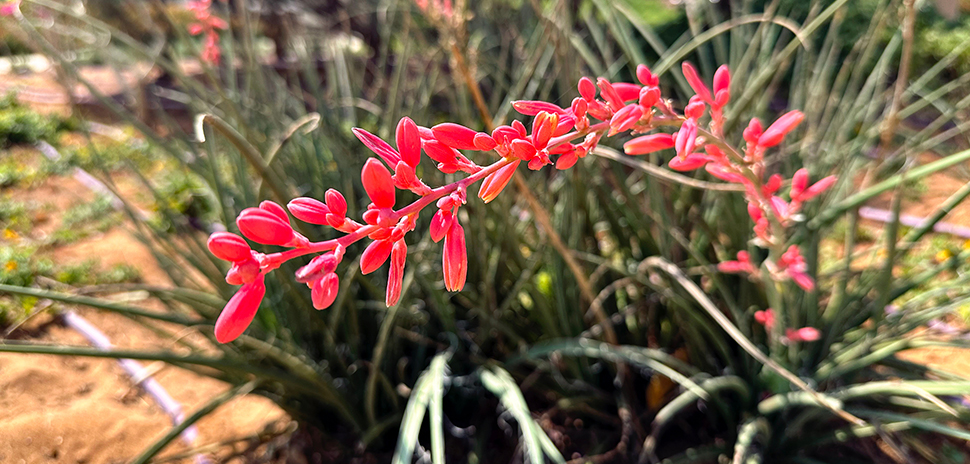
Hesperaloe will be familiar to many in North Texas. One of the plant species, hesperaloe parviflora, is commonly called red yucca and used as a landscaping accent. Hesperaloe need less water to grow than many plants, and its long leaves are a rapidly renewable natural fiber source, the company said.
“This represents an exciting moonshot for Kimberly-Clark and the culmination of more than two decades of materials and plant science expertise,” Craig Slavtcheff, Kimberly-Clark’s chief research and development officer, said in the company statement. “…While testing continues, we are optimistic [about] early results and believe this material will provide curve-bending performance in our products while strengthening our long-term growth and supply chain resilience and accelerating our journey toward a future less dependent on traditional fiber sources.”
The Natural Resources Defense Council welcomed Kimberly-Clark’s announcement.
“This is just the beginning but signals a potentially market-shifting breakthrough,” Shelley Vinyard, the council’s director of global nature, said in a statement. “If Kimberly-Clark can scale up production of this fiber sustainably and without displacing other native ecosystems, this could alleviate significant pressure on the forests currently used to make [paper-based] products.”
Next up: a pilot facility in Arizona
Kimberly-Clark said it is building a pilot facility in Yuma, Arizona, where its alternative fiber program is based. The company will collaborate with farmers and technical experts in Arizona, California and the broader Southwest. The pilot project will evaluate hesperaloe’s prospects as a “year-round source of agricultural and economic opportunity.”
Don’t miss what’s next. Subscribe to Dallas Innovates.
Track Dallas-Fort Worth’s business and innovation landscape with our curated news in your inbox Tuesday-Thursday.
R E A D N E X T
-

Joseph Rainone previously served as CEO of the e-commerce furniture company Ubique Group. He also held leadership roles at Melissa & Doug, Bayer and Hasbro.
-

Arcosa President and CEO Antonio Carrillo called the deal "a powerful validation of the work" his company has done in recent years—including Arcosa's $1.2 billion acquisition of the construction materials business of Stavola Holding Corporation in 2024.
-

In a “defining moment for Dallas College.," the planned next-gen transformation of the historic El Centro campus along downtown Dallas' Austin Street corridor "allows for a bold vision linking culture, commerce, transit, and education in one place," Dallas College said.