The Parkland Center for Clinical Innovation (PCCI) is partnering with North Carolina-based Vega Health to bring proven AI solutions for vulnerable populations to health systems nationwide.
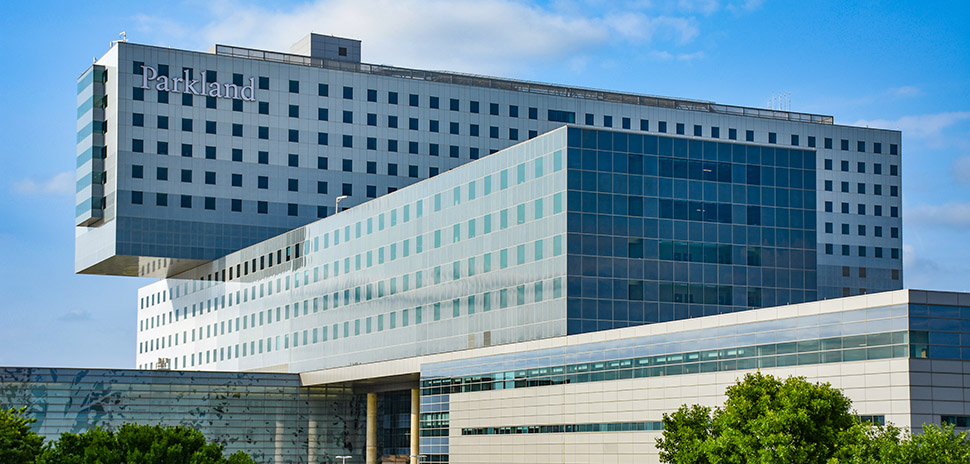
PCCI is a research and development nonprofit that brings “unparalleled expertise” in applying AI and social determinants of health to improve outcomes for vulnerable populations. PCCI has spent more than a decade designing, developing, implementing, and “rigorously monitoring” AI in the complex clinical environment of Parkland Health—a publicly owned Dallas County safety-net health system serving one of the most diverse and medically underserved patient populations in the U.S.
Vega Health, an end-to-end AI partner for health systems navigating the complexity of AI adoption and scaling, said its licensing agreement with PCCI will make five of PCCI’s clinically validated AI models available on the Vega Health Marketplace, expands access to proven AI solutions nationwide.
The partnership with PCCI reflects Vega Health’s commitment “to scale the most effective clinical AI models built inside health systems by the clinicians and data scientists closest to patient care,” the North Carolina-based company said.
PCCI’s innovations can now accelerate local impact by scaling to other healthcare delivery organizations, Vega Health said. The models will now be available to Vega Health’s growing network of health system partners, delivering a “replicable commercialization pathway” for innovators across healthcare delivery organizations.
‘A model without a workflow is just fancy math’
Steve Miff, PhD, president and CEO of PCCI, said his nonprofit “has always designed our models with one question in mind: How do we deliver actionable intelligence to front-line staff and supercharge their insights into the unique and rapidly evolving needs or each patient?”
“The goal is to predict an event before it happens, reduce the administrative burden, and help save lives,” Miff added in a statement. “A model without a workflow is just fancy math, and we’ve been looking for the right partner who understands what rigorous, successful implementation of clinical AI looks like in practice.”
The implementation with Vega Health aims to bring the “infrastructure, the implementation expertise, and the health system relationships that accelerate the scale at which our innovations operate,” Miff said. “This partnership expands options available to Vega Health customers, and ultimately benefits patients.”
Five models meet high-priority challenges
The five PCCI models now available on the Vega Health Marketplace address high-priority clinical and operational challenges facing health systems of all sizes, and include, per Vega:
:: Inpatient Sepsis Prediction: A real-time model that identifies patients at risk of developing sepsis within the next 12 hours in inpatient medicine units by surfacing the top clinical drivers of each prediction directly in the EHR workflow. The model enables faster, more confident intervention before deterioration occurs. PCCI’s model fired on average 19 hours before typical antibiotic administration, compared to 1.5 hours for current industry models.
:: ED and Urgent Care Sepsis Present-on-Admission (POA): Designed for the front door of the hospital, this model identifies patients arriving in the emergency department or urgent care setting who are already septic at presentation, triggering immediate provider and nursing alerts to accelerate time-to-treatment for sepsis.
:: Parkland Trauma Index of Mortality (PTIM): A predictive model that updates hourly to assess in-hospital mortality risk for polytrauma patients. Over a one-year period at Parkland, PTIM correctly identified 89% of the high-risk trauma patients and 92% of the low-risk trauma patients.
:: PARADE (Patients at Risk for Adverse Drug Events): At the time of admission, PARADE stratifies patients by risk of experiencing an adverse drug event during their stay, enabling pharmacist intervention that has been shown to prevent more than 2,000 adverse drug events and deliver over $17 million in avoided costs at Parkland.
:: Workplace Safety AI Model: Drawing on EHR data, HR records, and social drivers of health, the workplace safety prediction model efficiently screens admitted patients by identifying those encounters that are most likely to proceed without a violent incident, allowing care teams to focus their patient support efforts. In a pilot at Parkland, the model accurately predicted 77% of violent incidents within 30 minutes of admission.
Scaling the impact of PCCI’s work ‘beyond Dallas’
Vega Health Co-Founder and CEO Mark Sendak noted that Innovators developing AI models alongside healthcare systems’ front-line staff “spend years generating effective AI solutions, but the reach of those innovations often stops at the hospital’s front door.”
“PCCI represents exactly the kind of partner we built Vega Health for: a team that has done the hard work of developing, integrating, and proving AI in one of the most demanding clinical environments in the country,” Sendak added in a statement. “Our job is to make sure the impact of that work scales beyond Dallas.”
Sendak said the partnership “establishes a pathway for innovators everywhere” to scale the impact of their AI solutions through a marketplace partner aligned with their interests.
Health systems interested in leveraging PCCI models can now work with Vega Health to evaluate models on their local patient data before being implemented. Once the decision is made to implement a model, Vega Health supports clinical adoption and ongoing monitoring to track technical accuracy, clinical adoption, and real-world outcomes, the company said—adding that the partnership “is designed to serve as a model for how health system innovators can scale their work.”
Don’t miss what’s next. Subscribe to Dallas Innovates.
Track Dallas-Fort Worth’s business and innovation landscape with our curated news in your inbox Tuesday-Thursday.
R E A D N E X T
-
With 30 years of hospital pharmacy leadership experience, Rick Couldry’s deep expertise will help ensure Omnicell’s solutions reflect real-world clinical and operational needs with the goal of improving outcomes in complex care environments, the Fort Worth-based company said.
-
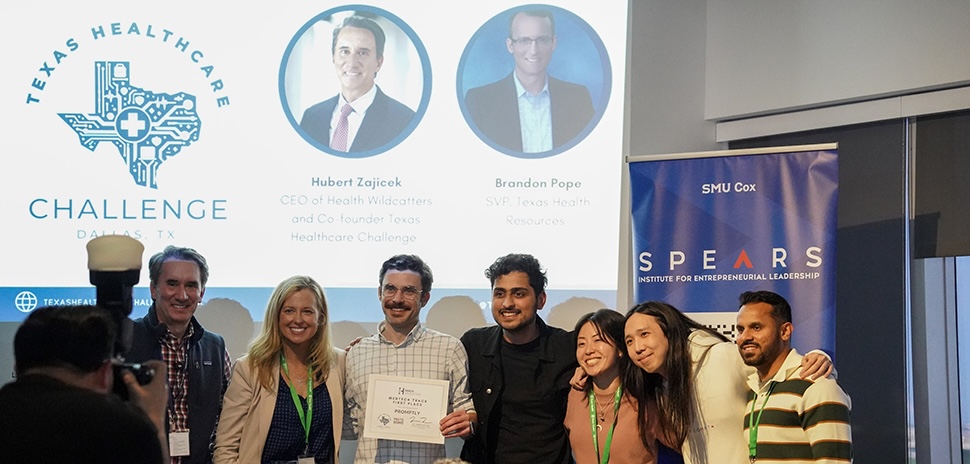
Participants at the Pegasus Park event had 48 hours to turn early-stage concepts and functional prototypes into actionable solutions "to improve health outcomes, expand access, improve patient experience, and drive system-wide efficiency," Health Wildcatters said.
-

Celebrating "powerful, enlightening storytelling that endures," The Laura Bush Book Club is part of the Engage at the Bush Center series presented by NexPoint. Pataki's latest novel is "It Girl," based on America's first "It Girl," Gibson Girl muse and actress Evelyn Nesbit, who in 1906 became entangled with a murder of passion that the press dubbed "the trial of the century."
-
The acquisition expands AMN Language Services’ ability to support patients with limited English proficiency during both human clinical interactions and in before and after care—while reinforcing the critical role of medically qualified human interpreters for clinical, complex, and sensitive conversations.
-
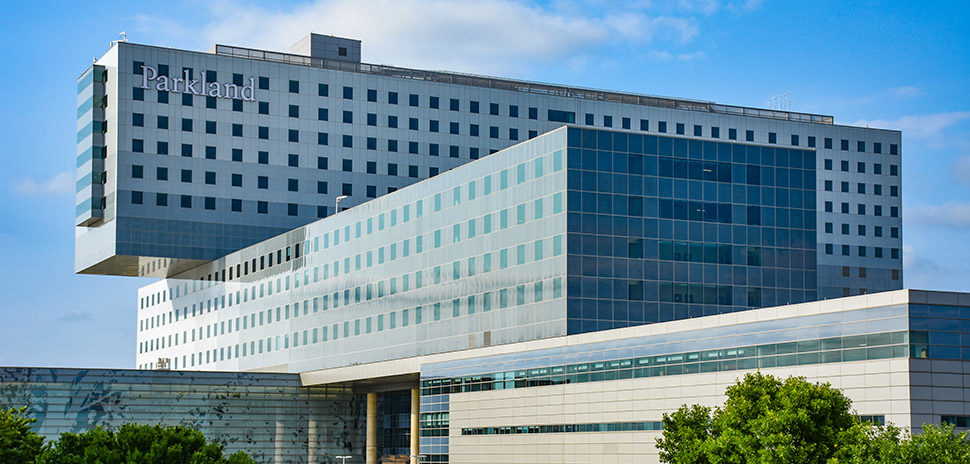
The funding consists of two $1 million grants to the Child Poverty Action Lab and to the Parkland Health Foundation. Each organization will receive $250,000 annually over the next four years to provide solutions and clinical care in underserved communities.
-

With a facility three times larger than Ziosk’s previous location, the Plano center offers autonomous working lines that can significantly accelerate processing speeds and quadruple its current product capacity, the company said.
-
Studies show the lifetime incidence of Alzheimer’s disease among adults with Down syndrome is 90%. Researchers called the national ABC-DS study "especially timely" as more treatment options for Alzheimer’s disease are found and more clinical trials are launched for adults with Down syndrome.
-
Studies show the lifetime incidence of Alzheimer’s disease among adults with Down syndrome is 90%. Researchers called the national ABC-DS study "especially timely" as more treatment options for Alzheimer’s disease are found and more clinical trials are launched for adults with Down syndrome.
-

As the VC firm nears the closing of its $200 million fund, the addition of Beau Spradling as CFO and the establishment of a permanent headquarters at Old Parkland will bolster the firm for its next phase of growth as it prepares for future funds, Balerion said.
-
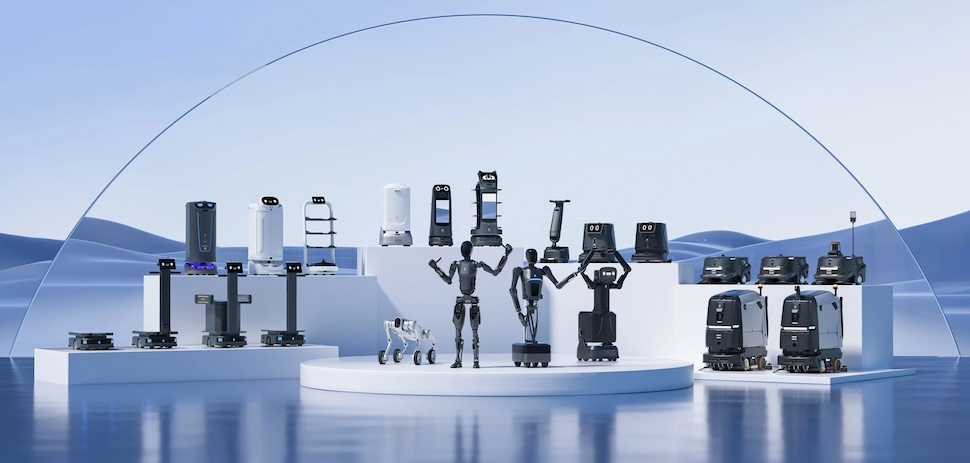
Pudu is relocating its U.S. HQ from Santa Clara, California, to Richardson's Sherman Tech Center. With nearly 15,000 of its robots deployed across the Americas to date for everyone from NASA to Walmart to Quik Trip, Pudu's solutions include service and industrial delivery, commercial cleaning, and "general embodied AI."