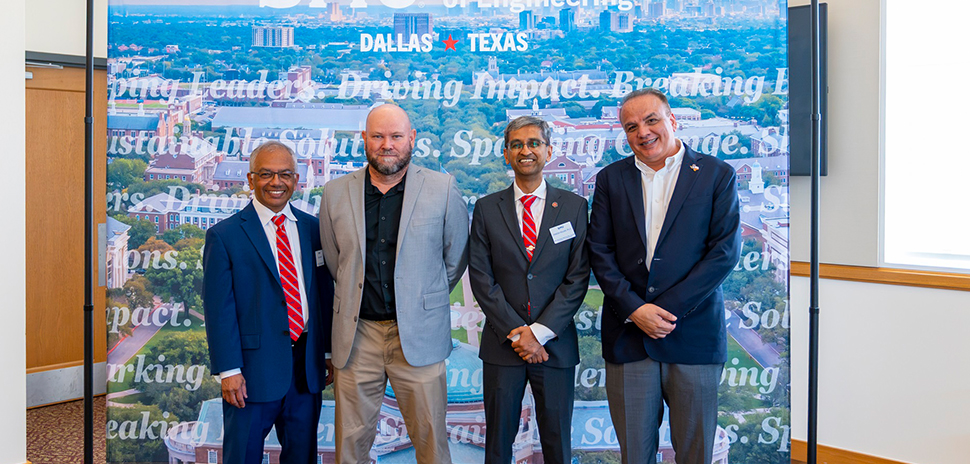
Southern Methodist University researcher Saeed Salehi will lead a $25 million project to develop a novel concept in critical-mineral mining.
The U.S. Department of Energy is backing the project with $19.3 million. Researchers believe the project will create the world’s first synthetic mine embedded within an advanced oil-and-gas drilling and sensing test facility.
The Well-to-Mine Proving Ground project aims to repurpose a traditional well near Bryan-College Station. The well, in Navasota, would become a facility for mining critical minerals.
SMU said the $19.3 million award is the largest individual funding commitment in the university’s history. Private funds will cover the rest of the project’s cost.
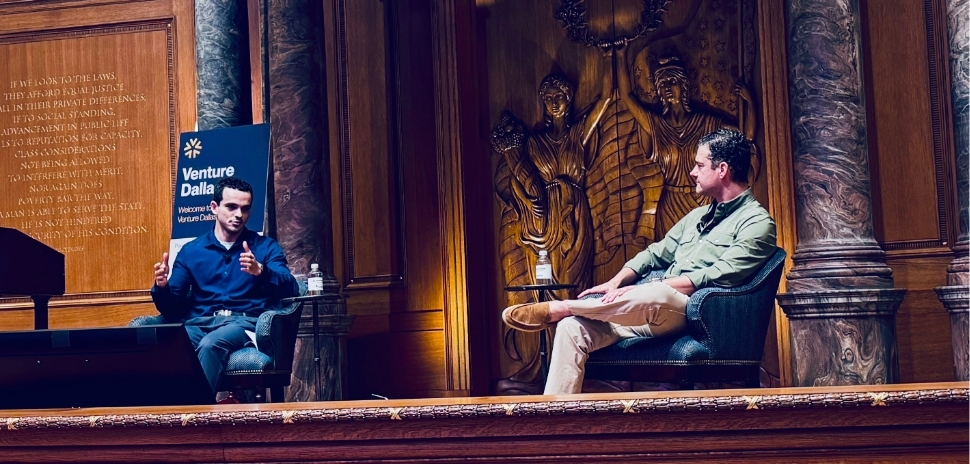
“That money could have gone anywhere,” Energy Secretary Chris Wright said during a recent visit to SMU. “It was competed for vigorously. But the faculty, the university leadership and the students in this room are why a large chunk of that money is going right here at SMU.
“We believe in SMU. … We believe in the faculty. We believe in the leadership and the tremendous student body,” he said.
The award comes from the Department of Energy’s Mine of the Future program. The program seeks to modernize U.S. mining practices and speed up development of the U.S. supply chain for critical minerals. The U.S. trails top producers China, Australia and the Democratic Republic of Congo, said Critical Minerals News.
Moving ‘promising innovations’ from the lab to the field
The synthetic mine will be at Houston-based NOV Inc.’s Research and Development Test Center in Navasota. The center’s advanced drilling infrastructure, automated control systems and other technology support testing and validation for mining.
Researchers will adapt advanced oil-and-gas technology like automated drilling, fiber-optic sensing, robotics and digital twins for critical-mineral extraction. They will engineer mineral-bearing rock, place it in existing wells and test various technologies. The goal, SMU said, is to “move promising innovations from laboratory research to field-scale demonstration and commercial use.”
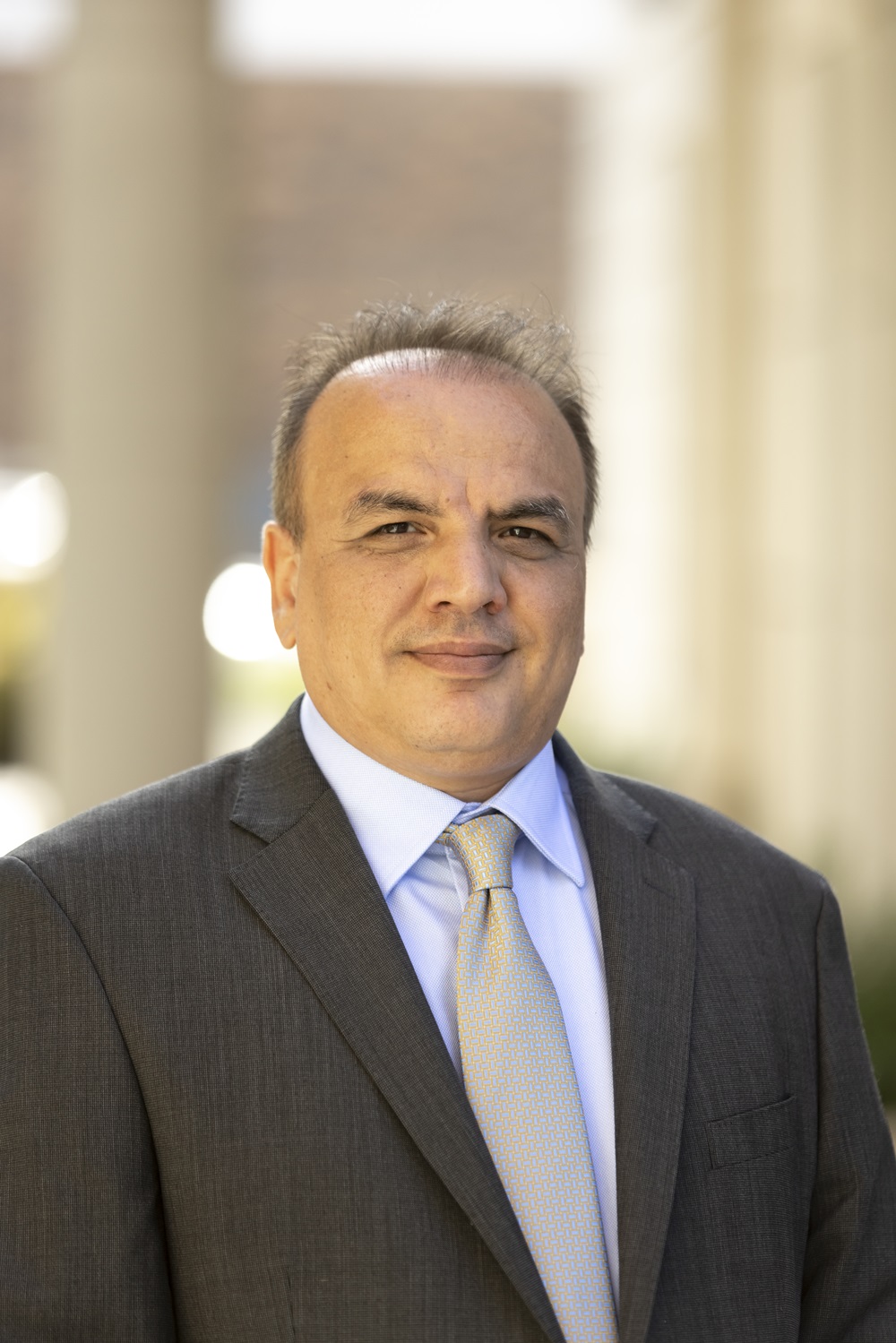
Saeed Salehi is the Herman Brown chair in mechanical engineering at SMU’s Lyle School of Engineering.
Saeed Salehi, the Herman Brown Chair in Mechanical Engineering at SMU’s Lyle School of Engineering, will lead the project.
“We have built the best oil-and-gas industry in the U.S., and we can unleash that expertise for mining,” Salehi said in a statement. “This is not something that’s going to happen in the lab. It’s going to go to the field, where we can test these technologies, refine them and ultimately move them toward the market.”
Partnering with industry and teaching students
SMU will lead a team of industry and university partners. Their combined expertise spans subsurface engineering, drilling systems, mining, AI and digital twins.
“Professor Salehi’s work is a powerful example of the high-impact research we are advancing at SMU,” university President Jay Hartzell said in a statement. “This project highlights the role of a research university in addressing challenges of national importance.”
The project will serve as a training ground for the next generation of engineers and mining professionals, SMU said. Students and workers will train through AI-enabled instruction, digital twin simulations and hands-on experience with drilling and mining technology. This will prepare them for careers in advanced mining.
“Our location in the heart of North Texas places us at the intersection of academic discovery, industry leadership and entrepreneurial innovation, creating powerful opportunities to translate research into real-world impact,” Rachel Mersey, SMU’s executive vice president and provost, said in a statement.
More on the mining program and SMU research funding
SMU received a share of $73 million in funding from the Department of Energy’s Mine of the Future initiative. Other recipients were the University of Arizona, the Missouri University of Science and Technology and Lynchburg, Virginia-based Innovative Wireless Technologies Inc.
In recent years, other SMU research projects have received federal funding.
Last year, for instance, SMU’s Darwin Deason Institute for Cybersecurity received a $2.7 million federal grant. The funding supports work identifying cyber vulnerabilities in AI- and machine-learning-powered autonomous systems.
Nearly four years ago, the Department of Energy awarded $2 million to SMU researchers. That funding supported renewable energy innovations designed to improve the U.S. power grid.
R E A D N E X T
-

Francine Geist, former CEO of LiveAction, succeeds Scott White as CEO of the cybersecurity solutions firm as part of a planned leadership transition.
-
Addison-based Empower EIT relocated to North Texas in May. It uses proprietary technology to turn brine into battery-grade lithium carbonate and aims to commercialize the process by 2027.