 Electric mobility is about more than battery range now. As EVs become part of everyday life, people want the experience to feel simple and reassuring, whether they are finding a charger, checking their vehicle status, making a payment, or getting help when they need it. The brands that understand these everyday concerns will be the ones that make EV ownership feel easier, more reliable, and truly worth trusting.
The International Energy Agency’s Global Energy Review 2026 reports that electric car sales reached 21 million units, with one in four cars sold globally being electric. That number says something important. Consumer preference is clearly shifting from petrol and diesel vehicles to electric mobility. And as more buyers understand the long-term benefits of owning an EV, this shift will only become stronger.
But there is one question I keep coming back to in conversations with automotive leaders:
If EV adoption has moved this fast, why has the experience around electric mobility not caught up?
More specifically, why does the software experience still feel inconsistent in an industry where software is now inseparable from the vehicle itself?
For years, most EV discussions began with the visible markers of progress: battery range, charging speed, running costs, model availability, infrastructure expansion and customer adoption. These are important, and they have shaped how far the industry has come.
But as EVs move into everyday life, the expectations around ownership are changing. Buyers are no longer evaluating the vehicle alone. They are evaluating the digital ecosystem around it.
Make the First Impression Digital, Reliable and Reassuring
Today, the first impression of a vehicle often happens before a buyer enters a showroom.
A potential customer may visit the website, explore the mobile app, watch digital test-drive videos, compare ownership tools, read reviews and check app store ratings before they speak to a salesperson. In many cases, the app experience becomes an early signal of how technologically mature the brand is.
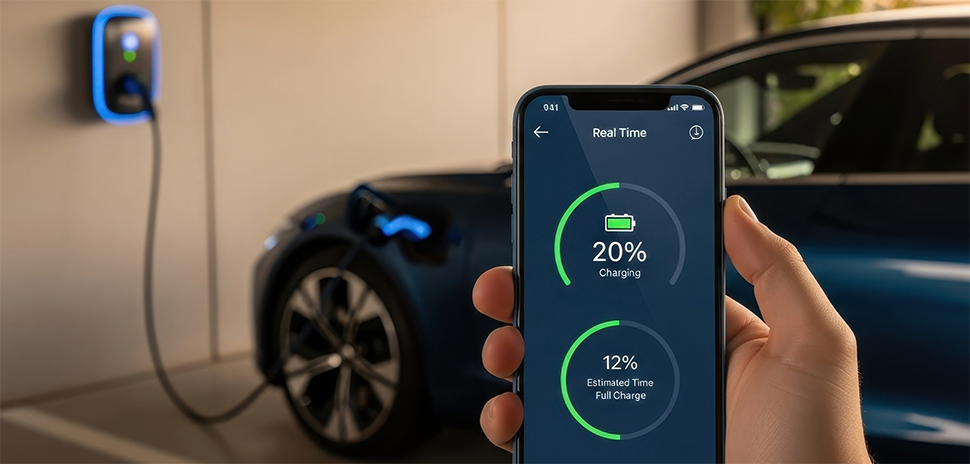
This matters deeply in EVs because ownership is app-dependent. Charging, preconditioning, remote monitoring, range visibility, payment, service updates and energy usage often live on the app. When the app is clunky or unreliable, customers do not treat it as a small inconvenience. They feel restricted. They feel less in control of the car they have bought.
In my view, buyers today are not just buying a vehicle. They are buying the whole ecosystem. The brands that get the digital layer right, with intuitive apps, reliable data and seamless charging journeys, will build trust faster and retain loyalty longer.
Move From Charger Availability to Customer Assurance
In one recent client conversation, a clear talking point was charging access. The basics were already working. Drivers could search for chargers, check availability, and start a session. But that successful solution also revealed the next opportunity: access alone was not enough.
Drivers still had questions. Would the charger be free when they arrived? Would the price change? Would the stop fit naturally into their route?
The next step is not simply to show options on a screen. It is to reduce uncertainty, support better decisions, and earn trust in the moments that shape the customer experience.
A useful platform should understand the driver’s route, charging history, preferences, battery status, and likely next need. It should combine that with charger availability, pricing, location context, and usage patterns to offer timely, practical guidance.
Not just, “Here is a charger nearby.”
But, “This charger fits your route and is the better choice right now.”
That is the difference between information and assurance.
We have seen this difference matter in real outcomes too. In one multi-brand EV charging platform that we helped build, the app achieved a 4.8 App Store rating and became one of the highest-rated eMSP apps in North America. Those numbers matter because they show that when the digital layer earns trust, customers respond positively.
Design the EV Day Seamlessly
The EV experience does not begin when a driver reaches a charging station. It starts much earlier.
Imagine a typical owner’s day.
They wake up to an alert that the car is fully charged. Before leaving home, they check whether the available range is enough for the trips planned that day. The vehicle dashboard gives them real-time information, while the app gives them confidence that the car is ready. If traffic changes, the system adjusts. If energy prices are higher during peak hours, smart charging has already helped them avoid unnecessary cost. If the vehicle detects a potential service issue, predictive maintenance alerts help reduce running costs before the problem becomes expensive.
At the end of the day, remote vehicle monitoring gives them peace of mind. Battery health, charging history, usage patterns and service updates are not scattered across disconnected systems. They are part of one connected ownership experience.
That is what EV the digital experience should become: not a set of isolated features, but a daily companion that quietly reduces friction.
This is why EV platform development has to be journey-led, not feature-led. The better question is not, “What feature can we add next?” It is, “Where does the customer still feel uncertainty, and how can we remove it?”
Build Everyday Trust on Scalable Platforms
EVs are no longer at the edge of the mobility conversation. They are becoming part of daily life. They expect it to be simple, dependable and easy to trust.
At the same time, the EV market will continue to change. Charging standards will change, partnerships will shift, pricing models will become more dynamic, and AI will play a larger role in how drivers plan trips, receive recommendations, access service and manage ownership.
This is where a product engineering mindset becomes critical. For the customer, the experience should feel effortless. But behind that simplicity sits a complex network of vehicles, charging systems, payment platforms, energy partners, roaming networks, support teams, dashboards and data flows. The driver should never have to deal with that complexity. The platform should absorb it, connect it and turn it into an experience that feels reliable and useful.
As a product engineering company, our role is to help automotive and mobility leaders absorb that complexity, connect it, and shape it into an experience that feels seamless, dependable, and easy to use. That could mean simpler onboarding, secure payments, account linking, real-time plan visibility, charging history, transaction receipts or simplified APIs that help manufacturers and mobility providers connect securely in the background.
Each capability removes a specific point of friction. Onboarding reduces the effort to get started. Account linking creates continuity. Secure payments build confidence. Strong integrations help the ecosystem work smoothly without pushing complexity onto the customer.
For the driver, it means fewer doubts. For the business, it creates the foundation to scale partnerships, improve service quality and support new charging models.
Building the Foundation for the Next Mobility Experience
For automotive leaders, the next step is practical. Before adding another feature, teams should ask: where does the customer still hesitate? Are we only showing information, or are we helping people make better decisions? Can the platform scale as partners, pricing models and expectations change?
In my view, the companies that lead the next phase of EV adoption will be the ones that think beyond the vehicle and build the experience around it. The real opportunity is to create a connected ecosystem that guides decisions, reduces anxiety, improves service, supports new partners and turns everyday interactions into moments of confidence.
This is where real value gets created. When charging, payments, customer data, support, energy partners and mobility services work together, the experience becomes simpler for the customer and more scalable for the business.
Electric mobility will only become more connected, predictive and intelligent. The foundation for that future has to be built now. The brands that win will not be the ones that only build better vehicles. They will be the ones that make electric mobility easier to trust every single day.
If you are rethinking how digital experiences can make EV ownership simpler, smarter, and easier to trust, let’s talk. Reach out to Manoj at [email protected] or visit www.experionglobal.com to explore how Experion can help you build connected mobility experiences that truly work for people.
Don’t miss what’s next. Subscribe to Dallas Innovates.
Track Dallas-Fort Worth’s business and innovation landscape with our curated news in your inbox Tuesday-Thursday.
R E A D N E X T
-

SK Signet opened an EV charger production base in Plano in 2023, and has since supplied more than 3,000 ultra-fast chargers across the U.S. market. During the visit, Plano officials discussed further collaboration with the South Korean company.
-

The new executives—Chief Investment Officer Louis Hsu, Chief Product and Strategy Officer Kristen Mirabella, and Chief Compliance Officer Cynthia Jackson—bring with them extensive experience at such leading financial institutions as Goldman Sachs, Schwab, U.S. Bank, BlackRock, and Grayscale, the firm said.
-

In the newly created role, Sabrina Callahan will help shape the strategic path for Southwest's marketing and digital strategy, enhancing the relationship between the airline's customers and its brand in an "authentic, distinctly Southwest way," the airline said.